

PROJECT CONSORTIUM
The INJECTHEAL consortium is composed of 12 partners from 8 European countries (Italy, Austria, Germany, Ireland, Spain, Switzerland, and the United Kingdom). This partnership includes academic institutions, research centers, small and medium-sized enterprises, and industry organizations, united by the goal of advancing knowledge and applications in the field of chronic wound healing.


Università degli Studi Del Piemonte Orientale “Amedeo Avogadro”
Italy
The Università del Piemonte Orientale “Amedeo Avogadro” (UPO) is a public Italian university founded in 1998. Through its 8 departments and School of Medicine, it offers a wide range of academic disciplines, including basic and advanced courses, laboratories, apprenticeships, training periods, and international exchanges. The university has 16,500 students, 477 academic staff and 422 technical and administrative employees. High- standard research and education are at the heart of the university’s mission, with its Board actively supporting researchers through project implementation, infrastructural facilitation, and participation in numerous European and international research and education programs.
UPO is the coordinator of the INJECTHEAL project and is responsible for the pre-clinical phase, which includes evaluating the efficacy and safety of the multifunctional hydrogel platform. This involves assessing its antibacterial and anti-inflammatory performance, as well as its overall biocompatibility. The UPO team conducts these studies using state-of-the-art laboratories and advanced equipment. The project also provides opportunities for young researchers, promoting their training and professional growth in an international, multidisciplinary environment.


EU CORE Consulting srl
Italy
EUCORE is a small to medium-sized enterprise specialised in consultancy services for a diverse client base, including universities, research institutions, private companies, public administrations, and non-profit organisations, both in Italy and internationally. The company supports clients interested in participating in research, innovation, and cooperation initiatives funded by the European Union, as well as by national and international programmes. EUCORE’s expertise covers the entire lifecycle of project participation, offering tailored services in project design, partner identification, administrative and financial management, and reporting, particularly in relation to Horizon Europe and similar funding frameworks.
In INJECTHEAL, EUCORE is responsible for key activities, including leading the project’s dissemination and communication activities, and preparing and periodically updating the Data Management Plan and the Exploitation Plan.


Akribes Biomedical GmbH
Austria
Akribes Biomedical GmbH is an Austrian biotech company dedicated to the improvement of chronic wound therapy. Using proprietary assay systems with wound exudates from patients, Akribes has identified and patented compounds and compound classes with so far unknown potential for the treatment of chronic wounds. Its lead program AKR101 is currently in preparation for a phase II proof-of-concept study which is scheduled to start recruiting in 2026. Akribes is located in the Vienna Biocenter research cluster.
In INJECTHEAL, Akribes is responsible for the evaluation of the hydrogel and its individual components in humanized wound assays.

EU CORE Consulting srl
Italy
EUCORE is a small to medium-sized enterprise specialised in consultancy services for a diverse client base, including universities, research institutions, private companies, public administrations, and non-profit organisations, both in Italy and internationally. The company supports clients interested in participating in research, innovation, and cooperation initiatives funded by the European Union, as well as by national and international programmes. EUCORE’s expertise covers the entire lifecycle of project participation, offering tailored services in project design, partner identification, administrative and financial management, and reporting, particularly in relation to Horizon Europe and similar funding frameworks.
In INJECTHEAL, EUCORE is responsible for key activities, including leading the project’s dissemination and communication activities, and preparing and periodically updating the Data Management Plan and the Exploitation Plan.
EU CORE Consulting srl
Italy
EUCORE is a small to medium-sized enterprise specialised in consultancy services for a diverse client base, including universities, research institutions, private companies, public administrations, and non-profit organisations, both in Italy and internationally. The company supports clients interested in participating in research, innovation, and cooperation initiatives funded by the European Union, as well as by national and international programmes. EUCORE’s expertise covers the entire lifecycle of project participation, offering tailored services in project design, partner identification, administrative and financial management, and reporting, particularly in relation to Horizon Europe and similar funding frameworks.
In INJECTHEAL, EUCORE is responsible for key activities, including leading the project’s dissemination and communication activities, and preparing and periodically updating the Data Management Plan and the Exploitation Plan.

Universität Siegen
Germany
The University of Siegen is a young and dynamic institution committed to shaping a future that places people at its core and fosters a profound sense of social responsibility. This commitment is embodied in the university’s guiding principle: “Shaping a humane future.” Recognized globally for its cutting-edge research on society’s most pressing challenges, the university supports both fundamental and applied research across a broad spectrum of disciplines, with a strong emphasis on interdisciplinary collaboration. The School of Science and Technology unites all STEM fields and adopts an interdisciplinary approach to address major challenges in technology and society. Through the collaboration of brilliant minds, a spirit of teamwork, and a commitment to innovation, the university is dedicated to developing innovative solutions.
In the INJECTHEAL project, the team at the University of Siegen focuses on the design and characterization of microcarriers loaded with anti-inflammatory and antimicrobial dendrons.


University of Brighton
United Kingdom
The University of Brighton, founded in 1992, is a public institution with 17,000 students and 2,150 staff across three campuses, offering diverse subjects from medicine to engineering, psychology to art. Its Centre for Regenerative Medicine and Devices brings together expert research and enterprise work to achieve pioneering, patient-driven treatments and technological innovation in regenerative medicine and medical devices. Addressing major global challenges, the Centre focuses on scientific knowledge, diagnostics and treatments based on regenerative medicine and devices in five main priority areas: neurodegenerative diseases and sensory dysfunctions, diabetes, wound healing, cardiovascular diseases and musculoskeletal diseases
In INJECTHEAL, the research team focuses on the design, synthesis and characterization of hyperbranched peptides, known as dendrons, as bacterium/cell-specific carriers of anti-microbial and anti-inflammatory agents as well as of an anti-inflammatory peptide. The synthesis of these nanocarriers and their ability to release the therapeutic agents in a controlled manner will contribute to the breakthrough the development of the INJECTHEAL technology. UoB team’s work also contributes to clinically relevant in vitro models of tissue regeneration.


Tissue Click Ltd
United Kingdom
Tissue Click Ltd is a Brighton-based biotechnology company that develops smart materials to support cell growth. From laboratory research to real-world therapies, its technologies are designed to guide cell behavior and accelerate tissue repair.
As part of INJECTHEAL, Tissue Click is creating innovative molecular building blocks that help power the project’s injectable hydrogel for wound healing. These smart materials are being developed to provide the hydrogel with its healing capabilities and to assist cells in rebuilding damaged tissue more effectively. Through its expertise in material design and regenerative medicine, the company contributes to turning cutting-edge research into the medical solutions of tomorrow.


Trinity College Dublin
Ireland
Trinity College Dublin (TCD), founded in 1592, is Ireland’s oldest and most prestigious university, renowned for its excellence in research, global outlook, and vibrant campus in the heart of Dublin. TCD is a leading research university, producing groundbreaking work across disciplines such as nanotechnology, immunology, and neuroscience, and is the only Irish institution in the League of European Research Universities (LERU).
The Trinity Translational Medicine Institute (TTMI) at Trinity College Dublin hosts the Nanomedicine Research Group, which leads pioneering work in the development, characterization, and clinical translation of advanced nanomaterials for therapeutic applications. With extensive collaborative national and international projects in translational nanotechnology applied to medicine and medical technology, it is driving innovation to transforms healthcare and improves patient outcomes.
Trinity College Dublin’s in INJECTHEAL is committed to translate biomedical research that transforms scientific discoveries into real-world healthcare solutions. It contributes to the safety assessment of each component of the multifunctional hydrogel platform and the preclinical in vitro assessment of lead candidates. TCD will also support exploitation activity, dissemination and communication as part of the project stakeholder engagement.


Politecnico di Torino
Italy
Politecnico di Torino is one of Italy’s leading technical universities, renowned for excellence in research, education, and innovation. Its activities cover a wide range of fields, from engineering and architecture to advanced biomedical technologies. POLITO has long-standing experience in international collaborations and has coordinated numerous EU-funded research and innovation projects. Within this framework, the BIOINSIDE Laboratory at the Department of Mechanical and Aerospace Engineering (DIMEAS), participating in INJECTHEAL, focuses on the design of biomaterials, scaffolds and nanoparticles for regenerative medicine and drug delivery.
Led by Prof. Valeria Chiono, within INJECTHEAL, the POLITO team is responsible for the design and development of innovative self-healing injectable hydrogels able to control infection and inflammation while promoting skin tissue regeneration in chronic wounds. POLITO will optimize hydrogel stiffness, degradation rate and injectability and will also design and 3D-print modelling systems to evaluate hydrogel performance in complex wound geometries. In addition, POLITO will support the scale-up of hydrogel production and the optimization of storage and sterilization conditions, paving the way for future clinical translation and industrial exploitation.


Joanneum Research Forschungsgesellschaft Mbh
Austria
JOANNEUM RESEARCH (JR) is an Austrian applied research organisation providing innovation and technology services with a strong focus on people, quality and societal impact.
In INJECTHEAL, JR contributes translational expertise from its HEALTH and COREMED institutes to support the development of innovative solutions for chronic wound care. JR leads the preclinical validation activities, ensuring that the injectable hydrogel technology can be applied safely and effectively in clinically relevant wound settings. Using established large-animal models and advanced imaging and monitoring approaches, JR assesses injectability, local distribution and performance of the hydrogel, as well as its therapeutic potential to support wound healing. JR also contributes to the evaluation of wound status monitoring, helping to generate robust evidence needed to advance INJECTHEAL outcomes towards further development and clinical translation.
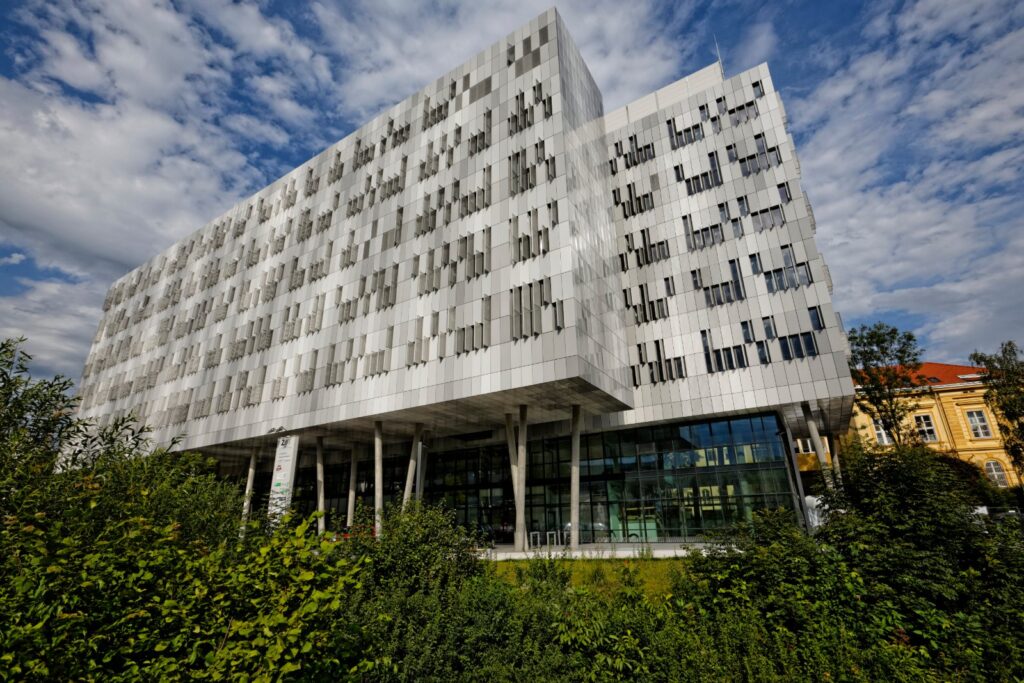

Consejo Superior de Investigaciones Científicas – INGENIO
Spain
INGENIO (CSIC-UPV) is a joint research centre of the Consejo Superior de Investigaciones Científicas (CSIC) and the Universitat Politècnica de València (UPV). Since 1999, it has investigated how science, technology and innovation shape and respond to societal challenges. As a transdisciplinary and inclusive centre, INGENIO promotes collaborative knowledge production and actively engages with the social actors it studies. It has developed strong expertise in analysing medical innovation, focusing on how new health technologies are developed, evaluated and adopted in clinical practice.
In INJECTHEAL, INGENIO will conduct an Early-Stage Health Technology Assessment using Multicriteria Decision Analysis to compare the INJECTHEAL technology with existing commercial products, considering factors such as patient well-being and quality of life. These evaluations will involve diverse stakeholders’ groups, including patients and healthcare professionals, recruited with support from project partners. INGENIO will also perform a Life Cycle Analysis of the INJECTHEAL technology to assess the environmental footprint of the product throughout its entire life cycle—from raw material extraction and manufacturing, to disposal or recycling.


Universitat Politecnica de Valencia
Spain
Universitat Politècnica de València (UPV) is a leading Spanish public university specialising in science, technology, engineering and arts. Founded in 1968, it hosts over 30,000 students and 3,800 teaching and research staff across its three campuses in Valencia, Alcoy, and Gandia. UPV combines academic excellence with strong industry and societal connections, actively fostering innovation, entrepreneurship, and knowledge transfer. The University participates in numerous European and international research projects, promoting open science and interdisciplinary approaches to address societal challenges.
In the INJECTHEAL project, UPV contributes advanced expertise in early-stage health technology assessment (eHTA), particularly through Multicriteria Decision Analysis (MCDA) methods, such as the Analytic Network Process (ANP). This approach considers the interdependencies between criteria and alternatives, offering a structured framework to evaluate the clinical feasibility, economic impact, technological maturity, regulatory compliance and environmental sustainability of health technologies. UPV also provides proprietary software platforms to support project outcomes, and brings extensive experience in communication, dissemination and knowledge valorisation.


The Lindsay Leg Club Foundation
United Kingdom
The Lindsay Leg Club Foundation was established in 2004 to support the Leg Club Network formed in 1995 as a psychosocial social model of lower limb care. Its mission is to provide guidance on and promote the use of contemporary equipment and practices for diagnosing, preventing, and treating leg ulcers and associated disorders. By placing individuals and their needs at the heart of its mission, the Foundation is widely recognised in the UK as a leading social mediator for person centred involvement in scientific medical innovation.
Within the INJECTHEAL project, the Leg Club network collaborates with scientific partners to ensure continuous person centred engagement and strong involvement in co-creation activities. This will ensure there is a link between the scientific advancement of the INJECTHEAL proposal and the involvement of the primary target groups of its scientific outcomes. This involves gathering the individuals (patients) needs and suggestions for improvement, as well as raising social awareness regarding new wound treatment materials.


Scuola Universitaria Professionale della Svizzera Italiana
Switzerland
The University of Applied Sciences and Arts of Southern Switzerland is one of nine professional universities accredited by the Swiss Confederation, committed to innovation, applied research, and collaboration with academic, industrial, and institutional partners. With a research budget of CHF 54.7 million in 2025, SUPSI supports diverse projects that address real-world challenges and actively participates in European research programmes. The Computational Biophysics Group led by Prof. A. Danani is part of the Dalle Molle Institute for Artificial Intelligence (IDSIA), a joint institute within SUPSI’s Department of Innovative Technologies and the Faculty of Informatics of Università della Svizzera italiana.
In INJECTHEAL, SUPSI contributes across WPs 1–6, leading computational simulations and the modular design of polymer nanocomposites for drug-delivery applications. Serving as a central hub for information exchange, SUPSI collaborates closely with experimental partners, and uses molecular modelling to guide the development and selection of hydrogel components and to optimise formulations.
